
 What's On HK

 Eat & Drink


 Travel

 Style
Style
 Beauty
 Health & Wellness

 Home & Decor

 Lifestyle


 Weddings

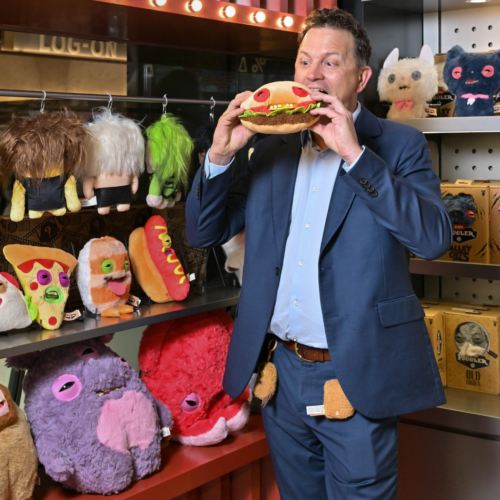
As Fuggler opens its first flagship store in Hong Kong, CEO Mark Kingston explains why ugly-cute toys — and the escapism they offer — are exactly what the city needs.
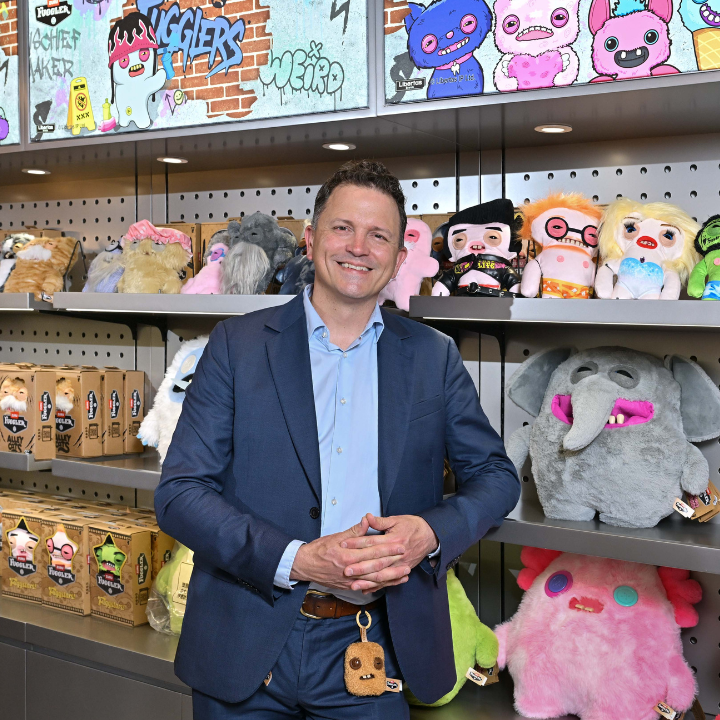
With mismatched eyes, an unsettling grin and teeth that look like a dentist’s nightmare, Fuggler is a far cry from the traditional plush toys. Yet the British-born “funny ugly monster” plush toy brand has become one of the most talked-about collectibles in Hong Kong. You will spot them everywhere, dangling from handbags and lined up on office desks. Mark Kingston, CEO of Fuggler Corporation, who was in town for the opening of the Fuggler flagship store at Hysan Place, Causeway Bay, sat down with us to talk about how the cult brand has taken the world by storm.
Read More: The Sassy Edit: Must-Haves In Hong Kong In May
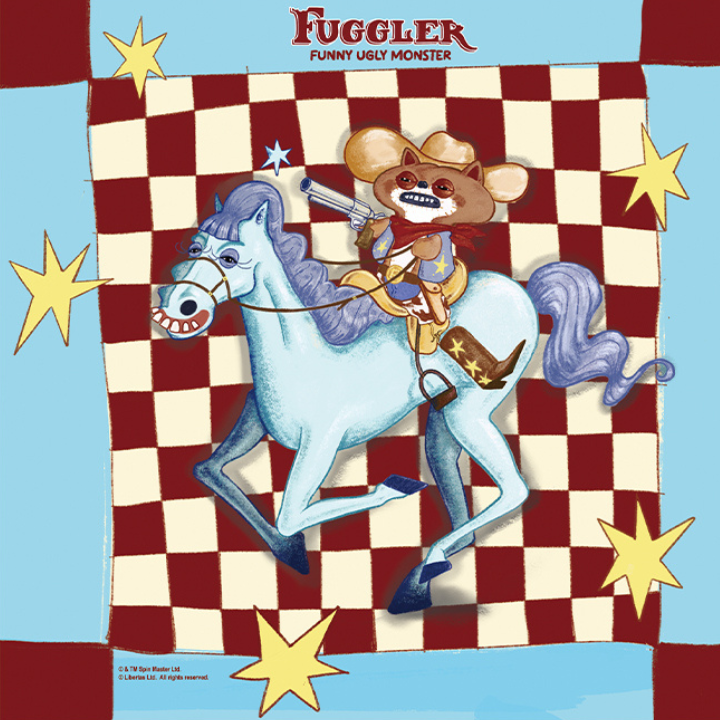
Fuggler Was Born From A Birthday Present
The Fuggler’s origin story is as wonderfully odd as the toys themselves. The brand was created in 2010 by a British woman named Louise McGetrick, who was stuck for a birthday gift idea for her husband, a devoted fan of Jaws. Her solution was to buy a lot of false teeth, eyes and buttons off eBay, stitch them into a plush toy, and present it to him as a one-of-a-kind gift. And that’s how the first Fuggler was born.
McGetrick began making more characters, eventually landing on the name “funny ugly monsters” — later condensed into Fuggler. Kingston and his team have since taken the concept global, injecting what he describes as “chaotic, mischief humour” into every design. “They’re ugly and cute, but it’s also that physical comedy,” he says. “When you look at them, it just puts a smile on your face. And then we can do anything with the different colours, patterns and fabrics to really bring out their personalities.”
Read More: Labubu & Beyond: Hong Kong’s Cutest Collectibles Guide
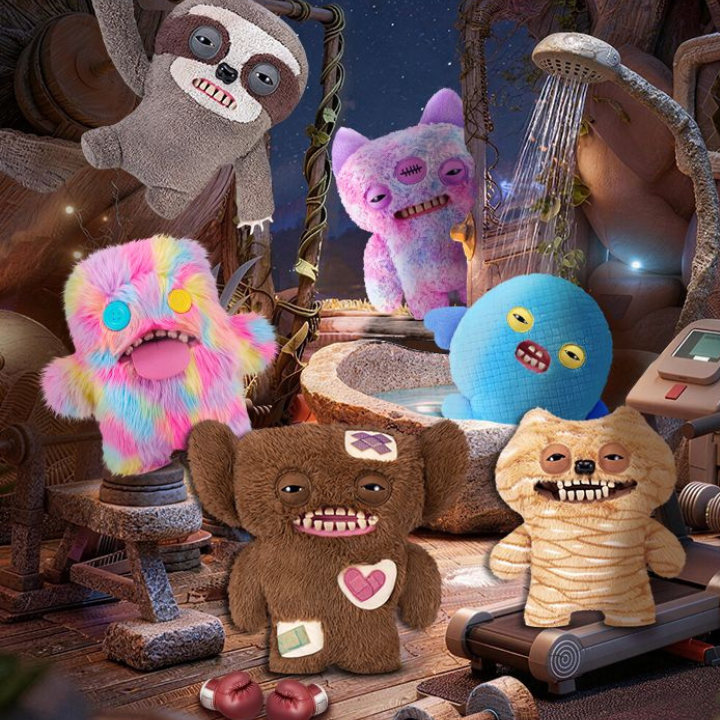
What’s In A Name? Everything!
Fuggler’s cult appeal is mainly due to its characters and, of course, their unusual names such as Sir Belch, Old Tooth and Yeti Betty. Each name feels like it was dreamed up in a school playground, and that is not entirely far from the truth. Kingston shares that naming sessions at Fuggler HQ are collaborative, freewheeling affairs involving the team and toy partner Zuru.
“We sit down, look at the various different designs and work out the character names that fit,” he says. “So if they’ve got a gap tooth, that’s why they’re Gaptooth McGoo. Sir Belch — well, Fugglers burp, belch, fart, so Sir Belch seemed quite appropriate.” He laughs. “We have really good fun just coming up with names. We band them about and take a couple of days to work out the names for each theme.”
It sounds simple, but it’s also a clever marketing strategy. In a crowded collectibles market, a memorable name transforms a plush toy into a character, and a character into something a buyer feels they need to collect, rather than simply possess.
Read More: What’s Hot In Hong Kong
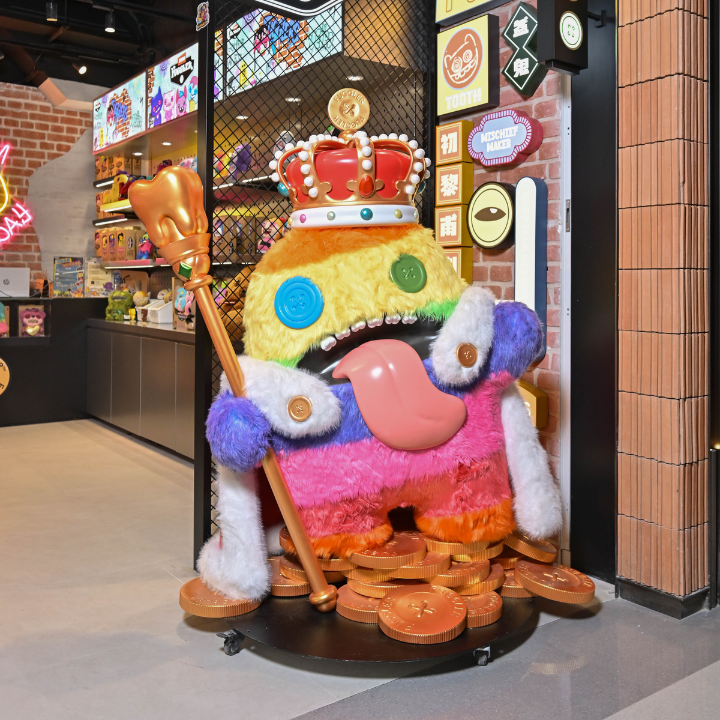
Ugly Has Never Looked So Good
In Asia, Fuggler now occupies similar cultural territory to Labubu, widely grinning creature from PopMart, that has become an icon. Both sit in what Kingston calls the “sweet spot where unsettling meets endearing”. But Kingston says that Fuggler, with its signature teeth and anarchic expressions, pushes the ugly-cute aesthetic even further.
“The fact that Fugglers don’t have that traditional toy aesthetic really makes you look at it again and again. I think everyone can find a Fuggler that fits their own personality,” Kingston says. “People don’t buy Fugglers. They want to own a Fuggler. They want to carry it and show off their personality through it.”
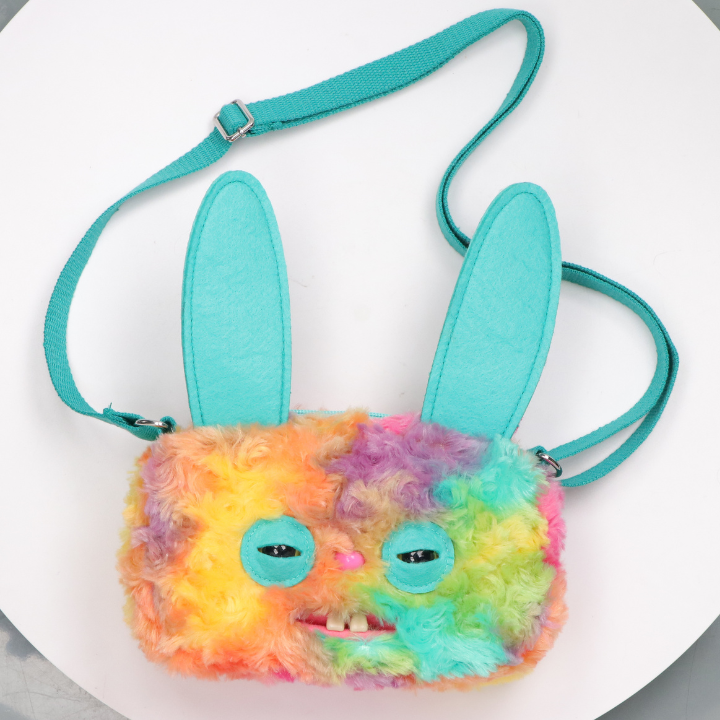
In Hong Kong, this is playing out most visibly through the brand’s bag clip format — miniature Fugglers that consumers attach to their bags and wear almost like a personal emblem.
Read More: The Best Thrift Stores To Shop Vintage, Second-Hand Clothing
The Blind Box Dopamine Hit
Like Labubu, Fuggler also has a blind box format, and Kingston is candid about why it works so effectively. “That dopamine hit when you’re opening the box and not knowing what you’re going to get — that really resonates here in Hong Kong,” he says. “You chase the rarities, you want to complete the whole collection, you can exchange with your friends — and today you can do that through platforms like Vinted or eBay.”
He is quick to clarify that Fuggler does not actively cultivate the secondary resale market — “that just happens to be a coincidence” — but a thriving secondary economy only deepens a brand’s cultural weight, and Kingston knows it. The numbers tell their own story: Rhodes Pet Science revealed in a 2026 study that “Fuggler has become a global phenomenon in the human toy category with almost 1 billion views on social media and over 25 million units sold last year.” People are not just buying a Fuggler; they are building communities and entire online identities around them.
Read More: Your Complete Guide To Every Pet-Friendly Mall In Hong Kong
What It Says About Us
Perhaps the most interesting question surrounding Fuggler’s rise — and the broader “kidult” phenomenon — is not really about the toys at all. It is about what our appetite for them reveals. “I think it is escapism. It’s an innocent way of expressing yourself and having a bit of fun,” Kingston says. “There’s a lot of external stress, a lot of pressure in modern society. Fuggler comes along, we don’t take ourselves too seriously, we recognise that not everything is perfect — we live in an imperfect world.”